

The Science of Hadith
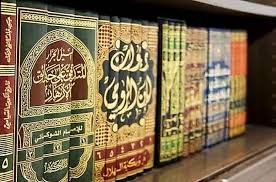
Assalamu’alaikum warahmatullahi wabarakatuh.
Among the millions of words ever spoken by humankind, there are sentences that never fade with time—
words not born of worldly interests, but spoken from the lips of a Prophet whose entire life was revelation.
Those words are the hadiths of Prophet Muhammad ﷺ.
They are not merely stories of the past.
They are light—illuminating the path of the ummah until today.
However, not everything attributed to the Prophet truly originated from him.
For this reason, scholars have preserved hadith with extraordinary knowledge, caution, and love.
WHAT IS THE SCIENCE OF HADITH?
Hadith refers to everything attributed to the Messenger of Allah ﷺ:
his statements, his actions, and his approvals.
Unlike the Qur’an, hadith was not revealed all at once.
It was transmitted—
from tongue to tongue,
from generation to generation.
From this process emerged a noble discipline known as the Science of Hadith.
This science does not merely ask:
- “What did the Prophet say?”
but also:
- “Who transmitted it?”
- “Was he trustworthy?”
- “Did he have a strong memory?”
- “Did he truly meet his teacher?”
Scholars then divided the science of hadith into two branches:
- Ilm al-Riwayah – the science that preserves the exact wording of hadith, ensuring not even a single letter is altered.
- Ilm al-Dirayah – the science that evaluates the quality of hadith by critically examining the chain of narration (sanad) and the text (matan).
From here, we come to know the classifications:
- Ṣaḥīḥ (authentic)
- Ḥasan (good)
- Ḍa‘īf (weak)
- Mawḍū‘ (fabricated)
A scholarly system unmatched by any other religion in the world.
ASBĀB AL-WURŪD (CONTEXT OF HADITH)
The Messenger of Allah ﷺ was Allah’s chosen servant.
He spoke within specific circumstances.
Sometimes to a questioning companion,
sometimes as a head of state,
sometimes as a father,
sometimes as an educator.
Thus, hadith has context.
This is known as Asbāb al-Wurūd—
the reason why a hadith was spoken.
Without understanding it, one may misinterpret the Prophet’s words.
When the Prophet ﷺ said:
أَنْتُمْ أَعْلَمُ بِأَمْرِ دُنْيَاكُمْ
“You are more knowledgeable about your worldly affairs, (Moeslim, no. 2363)”
he was not separating religion from life.
Rather, he was teaching that Islam honors knowledge, experience, and expertise.
Hadith must not be understood solely through its text,
but also through its time and circumstance.
For the Prophet ﷺ never spoke in a vacuum.
Times change.
Technology advances.
Yet humanity continues to seek the same things: peace, meaning, and direction in life.
And hadith comes to answer them all.
When the world is obsessed with popularity, the Prophet ﷺ reminds us:
“Actions are judged by intentions.”
When social media overflows with hatred, the Prophet ﷺ says:
فَليَــقُلْ خَــــيْرًا أَوْ لِيَـصـــمُــتْ
“Speak good, or remain silent.” (Bukhori)
When people hurt one another, the Messenger of Allah ﷺ teaches:
خَيْرُ النَّاسِ أَنْفَعُهُمْ لِلنَّاسِ
“The best of people are those most beneficial to others.”
Hadith is not only for the mosque.
It lives in our homes, on our streets, and on the screens of our mobile phones.
BEWARE OF FABRICATED HADITH
Today, hadith spreads faster than knowledge.
Many quotations circulate in the name of the Prophet ﷺ,
while in fact the Messenger of Allah warned:
“Whoever deliberately lies about me, let him take his seat in Hellfire.”
Fabricated hadiths may sound beautiful—but they are dangerous.
Their common signs include:
- exaggerated rewards
- instant promises of paradise
- unclear or missing sources
- absence from authentic hadith collections
Goodness never requires falsehood.
And da‘wah must never be built upon fabrication.
CLOSING
The science of hadith is not mere memorization.
It is the legacy of the scholars’ love for the Messenger of Allah.
So that this ummah does not go astray.
So that Islam remains pure.
So that the words of the Prophet remain authentic.
For loving the Prophet ﷺ
is not only through sending blessings upon him,
but also by ensuring that every word attributed to him truly came from him.
Hadith is light.
And knowledge is its guardian.
Do you agree?
Share your thoughts in the comments below.
That concludes today’s episode.
If this content is beneficial, please support the channel so we may remain motivated.
Wassalamu’alaikum warahmatullahi wabarakatuh.